
Design and Development
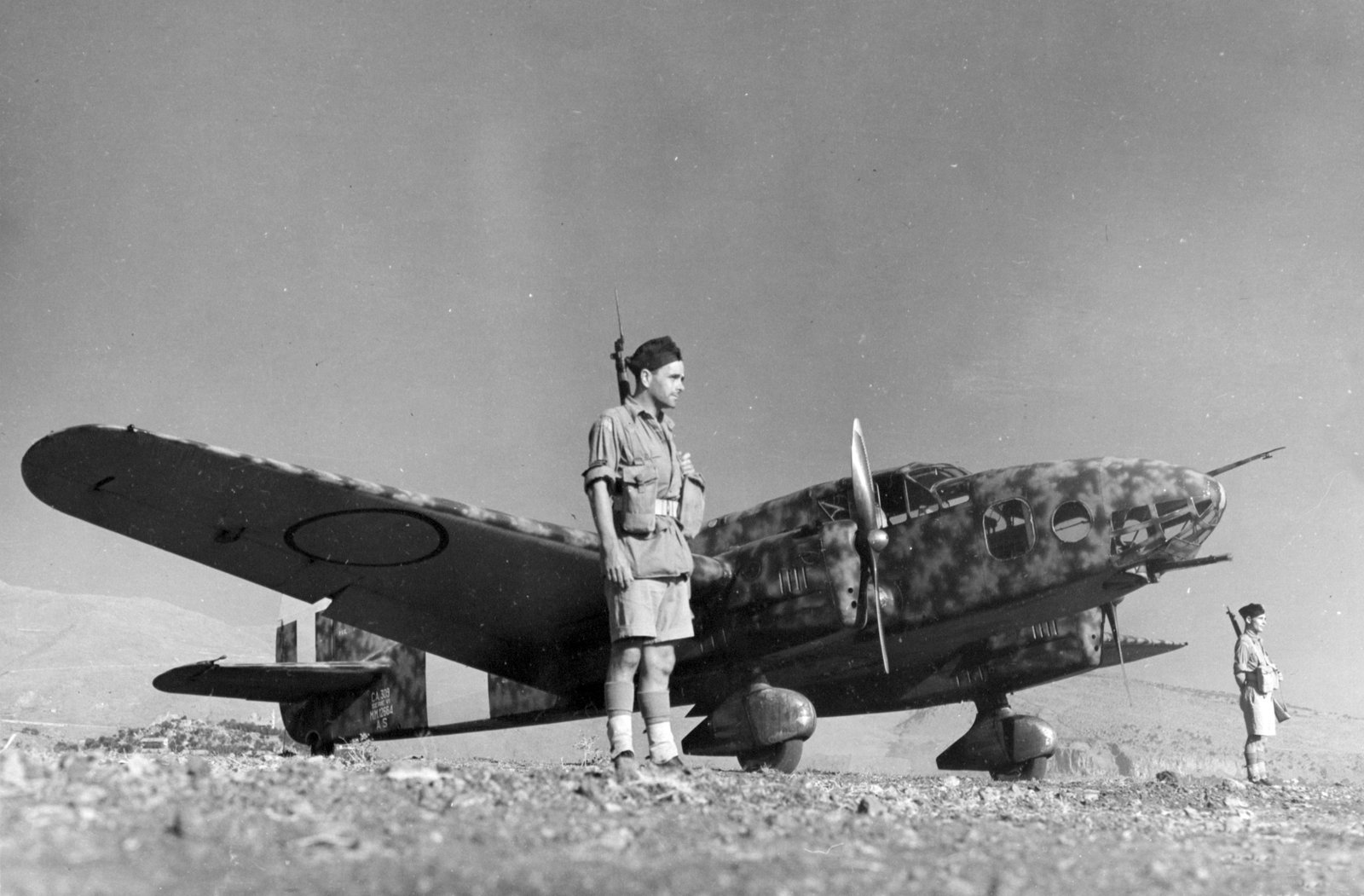
Designed by Italian engineer Cesare Pallavicino, the Caproni Ca.309 Ghibli was derived from the Ca.308 Borea small transport, which itself evolved from the Ca.306 prototype airliner. The aircraft was conceived as a multi-role replacement for the obsolete IMAM Ro.1 biplane, specifically optimized for deployment in the sands of North Africa. The resulting configuration was a low-wing cantilever twin-engine monoplane featuring a fixed tailwheel undercarriage. Depending on the variant, the aircraft served as a colonial reconnaissance bomber with a glazed nose or a light transport featuring an unglazed nose and seating for six passengers.
Production and Technical Specifications
The prototype first flew at the end of August 1936. Serial production took place at Caproni's Ponte San Pietro plant near Bergamo, Italy, continuing until approximately 1942. Bulgaria also produced the aircraft under license as the KB-309, with production there ending in 1941. Exact total production is not reliably documented in accessible secondary sources; however, it is estimated that over 200 were built. Some sources cite 243 units as having been operated by the Regia Aeronautica, though this is an operator figure rather than a confirmed total production count.
Italian versions were powered by two Alfa Romeo 115 series inline piston engines. Early aircraft used the Alfa Romeo 115-I, while later colonial bomber series utilized the Alfa Romeo 115-II, rated at 390 hp each. The Bulgarian KB-309 variant was powered by two German Argus As 10C engines. Standard colonial reconnaissance bombers were armed with three 7.69 mm Breda SAFAT machine guns and could carry up to 336 kg of bombs. A Series VI close-support variant was later trialed, featuring a 20 mm Breda cannon in the nose to counter British armored reconnaissance vehicles.
Operational History
The Ca.309 was deployed in Libya starting in 1937, operating from airfields such as El Adem, Kufra, Khon, and Tripoli-Mellaha. During World War II, it performed reconnaissance and patrol missions along the Libyan-Tunisian border and over Egyptian fronts. While used for ground-attack missions, it was found to be not very suitable for the role. Following the Axis defeat in Africa in 1943, surviving aircraft were transferred back to Italy for use as trainers and transports.
Post-armistice, 17 aircraft served with the Aeronautica Nazionale Repubblicana and 4 with the Italian Co-belligerent Air Force. Some remained in service with the Aeronautica Militare Italiana until 1948. Beyond Italy, Bulgaria used the KB-309 as headquarters and communications aircraft, and Paraguay operated two Ca.309s as transports from 1939 until 1945, after which they were transferred to the military-run airline Líneas Aéreas de Transporte Nacional (LATN) until the early 1950s.