
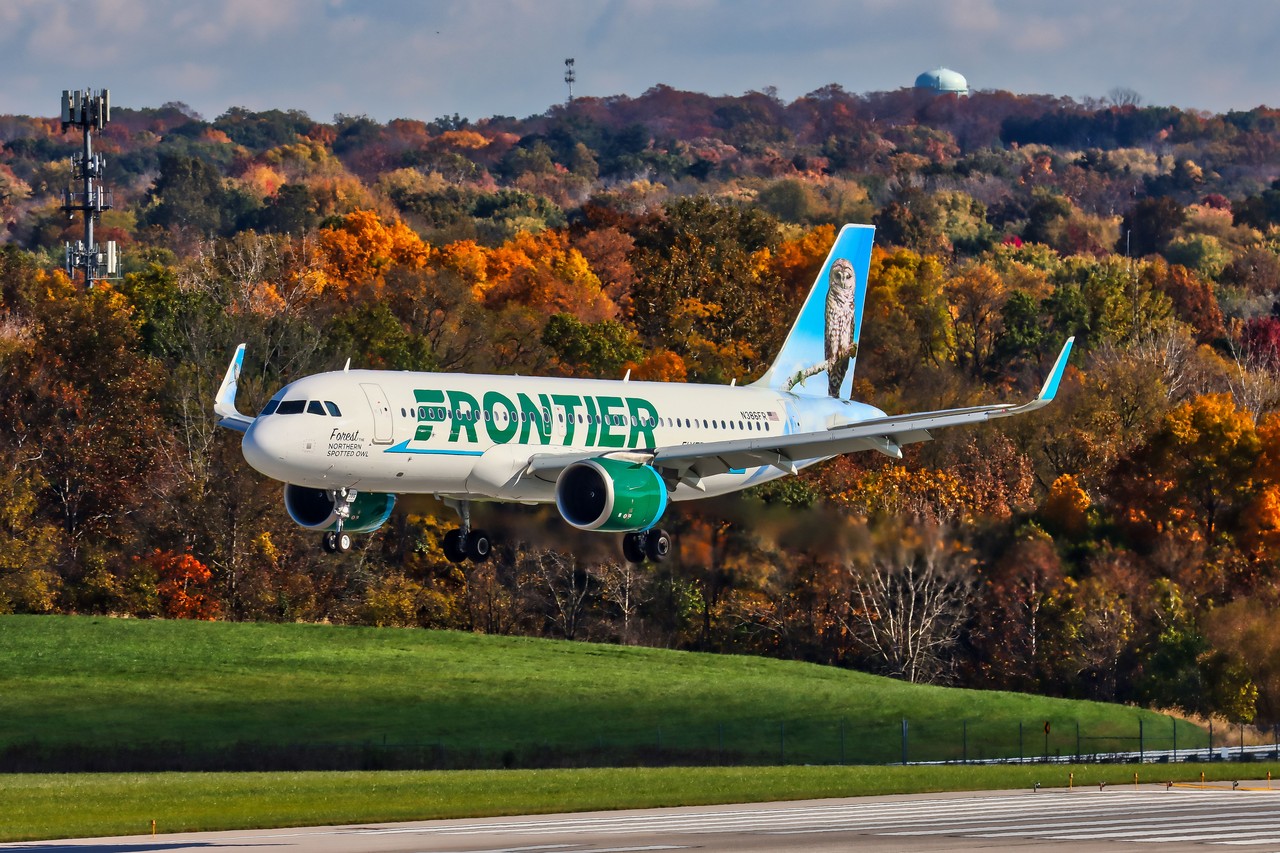
Market Dominance
The A320 family has achieved unprecedented commercial success, accumulating over 18,460 orders by February 2024 and surpassing all competing aircraft programs in total sales. In 2023 alone, airlines ordered more than 1,800 A320 family aircraft, including a historic 500-unit purchase by Indian carrier IndiGo. This market dominance stems from the aircraft's exceptional versatility, allowing operators to deploy the same pilot type-rating across multiple variants while maintaining consistently low operating costs.
Revolutionary Design Innovation
When Airbus launched the A320 program on March 2, 1984, with 96 initial orders led by Air France, the aircraft introduced groundbreaking fly-by-wire technology to commercial aviation. This electronic flight control system replaced traditional mechanical cables and pulleys, establishing the technological foundation for all subsequent Airbus aircraft. The innovation proved so successful that it influenced competitor designs industry-wide and became the standard for modern airliner development.
The Manufacturer
Airbus originated as a European consortium designed to challenge American aerospace dominance in commercial aviation. From its position as an industry outsider four decades ago, Airbus evolved into the world's leading commercial aircraft manufacturer. The company continues operations today as a major global aerospace corporation, maintaining A320 family production alongside development of next-generation variants. This transformation demonstrates one of the most successful international industrial collaborations in aviation history.
Engine Technology Evolution
The original A320 variants, later designated Current Engine Option (CEO), utilized conventional turbofan powerplants until Airbus launched the New Engine Option (neo) program on December 1, 2010. The neo variants feature either CFM International LEAP-1A engines or Pratt & Whitney PW1100G geared turbofan engines, delivering significant improvements in fuel efficiency and emissions reduction. The neo configuration became an immediate market success, accumulating over 10,000 orders and far exceeding original sales projections.
Global Production Network
Airbus operates A320 final assembly lines on four continents, including the original facility in Toulouse, France, plus locations in Hamburg, Germany, Tianjin, China, and Mobile, Alabama. In July 2023, the company inaugurated a dedicated A320neo assembly line in the former A380 production facility at Toulouse-Blagnac, demonstrating continued investment in the program's future. This global manufacturing approach enables Airbus to serve regional markets efficiently while maintaining consistent production quality.
Service Entry and Operational History
Lufthansa became the A320neo launch customer, taking delivery of the first aircraft on January 20, 2016, and operating the inaugural commercial flight from Frankfurt to Munich on January 25, 2016. The A321neo variant followed in May 2017 with delivery to Virgin America, configured with 184 seats and LEAP engines. The extended-range A321LR completed certification on October 2, 2018, with Arkia receiving the first example on November 13, 2018.
Family Expansion
The A320 program expanded beyond the original aircraft to include the shorter A318 and A319 variants, plus the stretched A321, which entered service in 1994. The latest family member, the A321XLR, represents the most capable single-aisle aircraft for long-haul operations, scheduled to enter service in 2024. Corporate variants include the ACJ320neo, first delivered in January 2019, and the ACJ319neo, which completed a record-setting 16-hour, 10-minute endurance flight on April 25, 2019.
Performance Specifications
The A320neo achieves a maximum range of 6,300 kilometers (3,400 nautical miles), enabling airlines to operate transcontinental routes previously requiring larger aircraft. The fly-by-wire system provides consistent handling characteristics across all flight phases while reducing pilot workload and training requirements. This technological integration allows airlines to maintain common type ratings across the entire A320 family, significantly reducing operational complexity and costs.
Aviation Legacy
The A320's introduction of fly-by-wire technology to commercial aviation created a paradigm shift that continues influencing aircraft design today. As the second best-selling airliner in aviation history after the Boeing 737, the A320 family demonstrates how technological innovation combined with market responsiveness can reshape an entire industry. The program's four-decade production run and continued evolution through neo variants establishes the A320 as one of the most successful commercial aircraft programs ever developed.