
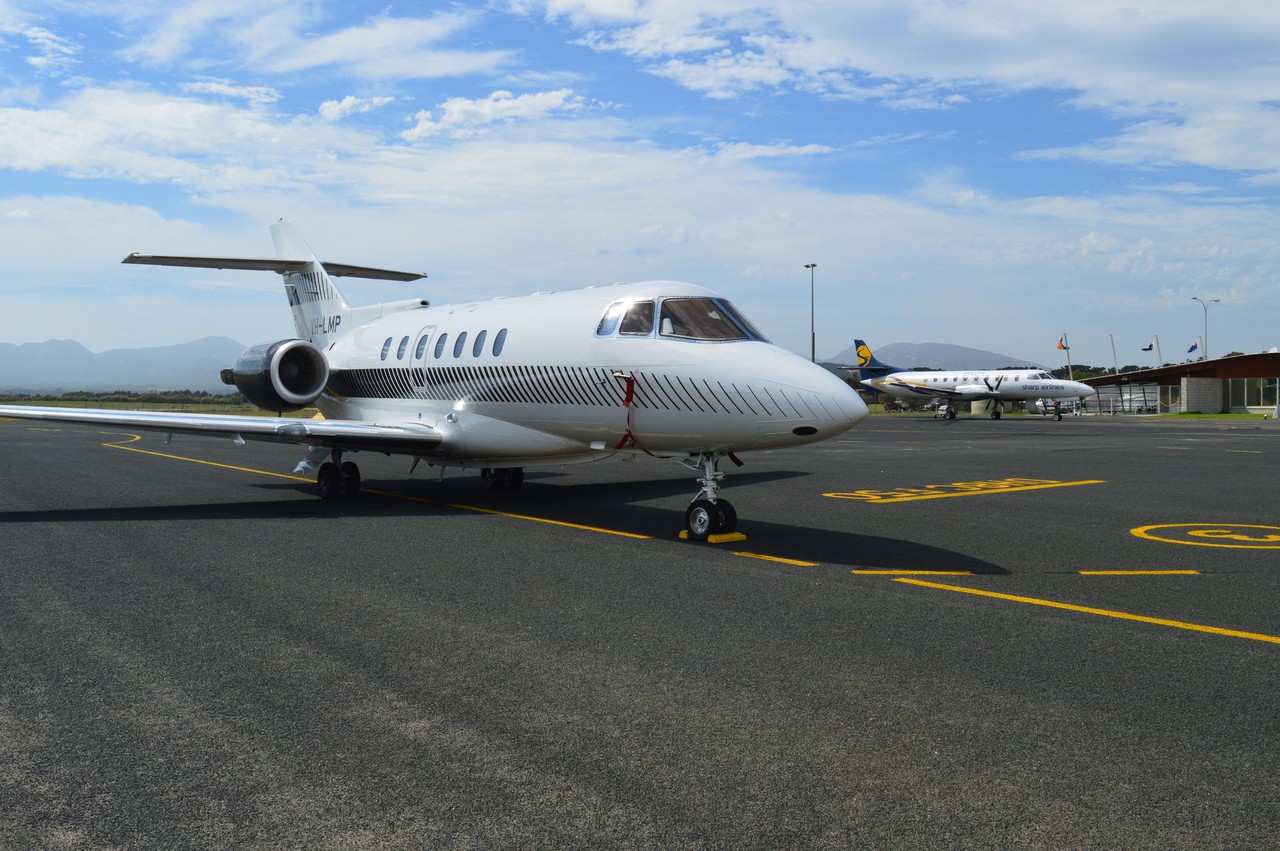
Service History
The Hawker 1000 carved out a specialized niche in the super-midsize business jet market during the 1990s, competing directly with aircraft like the Learjet 55/60 and Citation 650. Unlike many business jets of its era that focused on domestic routes, the Hawker 1000 was specifically designed for intercontinental operations, initially targeting non-North American customers who required extended range capabilities. By 2014, only six Hawker 1000B aircraft remained operational worldwide, with fifty percent based in Europe and thirty-three percent in Africa, representing a small but exclusive fleet.
The Manufacturer
British Aerospace originally developed the Hawker 1000 as the BAe 125-1000, drawing on decades of experience with the HS-125 family that began in 1961. BAe itself was formed in 1977 through the merger of British Aircraft Corporation, Hawker Siddeley Aviation, and Scottish Aviation, carrying forward the prestigious Hawker name from World War II fighters like the Hurricane. The company's business jet division underwent significant changes during the 1990s, with BAe selling its Corporate Jets division to Raytheon in August 1993. This acquisition led to the formation of Raytheon Corporate Jets, which merged with Beech Aircraft in September 1994 to become Raytheon Aircraft. The lineage continued through Hawker Beechcraft in 2006, ultimately becoming part of Textron Aviation in 2014, which continues supporting approximately 1,200 original Hawker aircraft still flying today.
Design Innovation and Development
The Hawker 1000 evolved from the proven HS-125 design through strategic engineering enhancements focused on intercontinental capability. British Aerospace engineers stretched the fuselage by 33 inches, creating space for an additional 200 gallons of ventral fuel storage that enabled the aircraft's impressive 3,000-nautical-mile range. The aircraft marked several technological firsts for the Hawker line, including the debut of Pratt & Whitney engines and the integration of advanced digital avionics with Full Authority Digital Engine Control (FADEC) systems.
The design team incorporated innovative TKS anti-icing technology, utilizing alcohol-fluid distribution through porous leading edges to prevent ice accumulation. Despite the technological upgrades, engineers maintained the traditional mechanical flight controls that allowed the aircraft to achieve Mach 0.78 cruise speeds while preserving the rugged handling characteristics that made the Hawker family famous for operations from rough airfields.
Engine and Performance Specifications
Powering the Hawker 1000 were two newly developed Pratt & Whitney Canada PW305 turbofan engines, marking the first time a Hawker aircraft utilized P&WC powerplants. These engines enabled a maximum cruise speed of 470 knots (870 kilometers per hour) and a long-range cruise capability of 400 knots (741 kilometers per hour) at Mach 0.60. The aircraft demonstrated impressive runway performance with a takeoff distance of 5,950 feet at sea level under International Standard Atmosphere conditions at maximum takeoff weight, while requiring only 2,600 feet for landing at maximum landing weight.
The Hawker 1000's service ceiling reached 37,000 feet, with a total fuel capacity of 10,000 pounds distributed between wing and ventral tanks. The aircraft typically operated with a two-person crew and could accommodate eight passengers in its spacious cabin measuring 24.4 feet in length, six feet in width, and 5.8 feet in height, providing 680 cubic feet of cabin volume.
Production and Manufacturing
Production of the Hawker 1000 spanned from 1991 to 2000, with Raytheon manufacturing the type from 1993 to 1998 following their acquisition of the program. The manufacturing process reflected the international nature of the aviation industry, with fuselages constructed in England, final assembly completed in Wichita, Kansas, and interior installation and avionics integration performed in Little Rock, Arkansas. While specific production numbers for the Hawker 1000 variant alone remain unspecified, the broader Hawker/HS-125 family achieved a total production run of 1,673 aircraft across all variants.
Legacy and Current Status
The Hawker 1000 represented the evolutionary peak of a design lineage spanning six decades, from the original HS-125-1 through the final 1000 series. Often described as the "Chevrolet Suburban of business jets" for its legendary ruggedness and reliability, the Hawker family established a reputation for surviving extreme conditions, including documented cases of aircraft continuing to fly after missile strikes. The design's robust construction enabled operations from unpaved airfields while maintaining an almost impossible center-of-gravity exceedance record.
Today, the Hawker 1000 remains a testament to British engineering excellence adapted for American manufacturing efficiency. While production ceased in 2000, the aircraft's type ratings remain active, and Textron Aviation continues providing support for the global Hawker fleet. The model's significance lies not merely in its technical specifications, but in its role as the final chapter of one of business aviation's most enduring success stories.